
Elegant antiques for collected homes
Luxury Antiques For Storied Spaces
Heirloom European Antiques for Modern Living
Austyn Marie Design: luxury antiques, purposefully chosen


Couldn't load pickup availability
Oil on Metal
15.5" W x 17" H
This antique Dutch oil painting on tin captures a richly detailed tavern scene, inspired by the 17th-century Golden Age of Dutch genre painting. Likely produced in the 19th century, this piece reflects the influence of artists such as David Teniers the Younger and Adriaen van Ostade, known for their lively depictions of everyday life in rustic interiors. The scene features a man and woman in a warmly lit domestic setting, engaging in a moment of leisure, an homage to the convivial social rituals so frequently documented by Dutch and Flemish masters. Executed in oil on tin, a technique favored for its luminous surface and durability, the painting presents fine brushwork and expressive character detail. Housed in an ornate period-style frame, this artwork embodies both decorative charm and historical narrative. A perfect addition to any curated wall, gallery collection, or traditional interior, this 19th-century genre painting brings a touch of Old World storytelling into the present.
The painting portrays a lively tavern scene, a popular subject among Dutch genre painters. Taverns served as central hubs for social interaction, making them ideal settings to explore human behavior and societal norms. Artists like David Teniers the Younger and Adriaen van Ostade frequently depicted such scenes, capturing the essence of communal leisure and festivity. These works often featured patrons engaged in merrymaking, music, and conversation, reflecting the culture's emphasis on social bonds and the simple pleasures of life.
The painting exhibits characteristics reminiscent of David Teniers the Younger, a Flemish artist renowned for his detailed and dynamic tavern scenes. Teniers' compositions often included groups of figures in rustic interiors, rendered with a keen eye for detail and a warm color palette. Similarly, your painting captures the convivial atmosphere of a tavern, with careful attention to the interplay of light and shadow, as well as the textures of the figures' attire and surroundings.
Another possible influence is Adriaen van Ostade, known for his depictions of peasant life and interior scenes. Van Ostade's works often portrayed intimate gatherings with a focus on the subtleties of human expression and interaction. The nuanced portrayal of characters in your painting suggests a familiarity with van Ostade's approach to capturing the essence of daily life.
The use of oil on tin is notable, as it differs from the more common canvas or wood panels of the period. Painting on metal surfaces like tin or copper was practiced in the 17th century, offering a smooth surface that allowed for fine detailing and a luminous quality. This technique was particularly favored for smaller works intended for private collections, as the metal's durability ensured the painting's longevity.
Paintings of this nature, especially those attributed to or inspired by artists like Teniers or van Ostade, are valued for their historical significance and artistic merit. The market value can vary widely based on factors such as provenance, condition, and the artist's recognition. For instance, authenticated works by Teniers have fetched significant sums at auction, reflecting their desirability among collectors. It's advisable to consult with art historians or appraisers specializing in Dutch Golden Age paintings to obtain a precise evaluation of your piece.
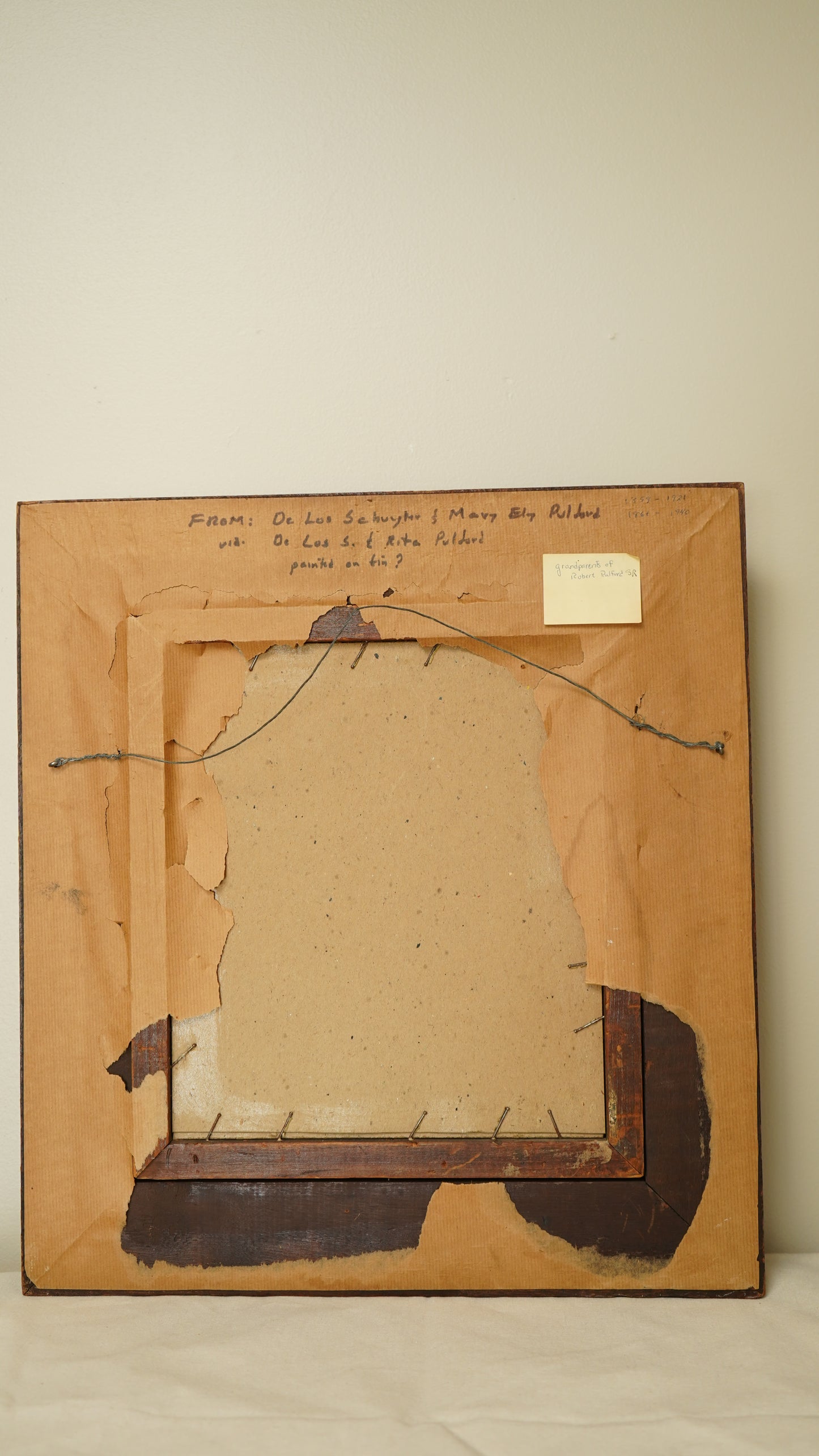
The painting is in good overall condition with expected age-related wear. The paint surface appears stable, with minor craquelure and possible edge wear, but no major structural damage. The ornate wooden frame shows some scuffs and slight tarnishing, though it remains structurally intact. If covered with glass, there may be dust buildup or minor scratches affecting clarity.




Oil on Metal
15.5" W x 17" H
This antique Dutch oil painting on tin captures a richly detailed tavern scene, inspired by the 17th-century Golden Age of Dutch genre painting. Likely produced in the 19th century, this piece reflects the influence of artists such as David Teniers the Younger and Adriaen van Ostade, known for their lively depictions of everyday life in rustic interiors. The scene features a man and woman in a warmly lit domestic setting, engaging in a moment of leisure, an homage to the convivial social rituals so frequently documented by Dutch and Flemish masters. Executed in oil on tin, a technique favored for its luminous surface and durability, the painting presents fine brushwork and expressive character detail. Housed in an ornate period-style frame, this artwork embodies both decorative charm and historical narrative. A perfect addition to any curated wall, gallery collection, or traditional interior, this 19th-century genre painting brings a touch of Old World storytelling into the present.
The painting portrays a lively tavern scene, a popular subject among Dutch genre painters. Taverns served as central hubs for social interaction, making them ideal settings to explore human behavior and societal norms. Artists like David Teniers the Younger and Adriaen van Ostade frequently depicted such scenes, capturing the essence of communal leisure and festivity. These works often featured patrons engaged in merrymaking, music, and conversation, reflecting the culture's emphasis on social bonds and the simple pleasures of life.
The painting exhibits characteristics reminiscent of David Teniers the Younger, a Flemish artist renowned for his detailed and dynamic tavern scenes. Teniers' compositions often included groups of figures in rustic interiors, rendered with a keen eye for detail and a warm color palette. Similarly, your painting captures the convivial atmosphere of a tavern, with careful attention to the interplay of light and shadow, as well as the textures of the figures' attire and surroundings.
Another possible influence is Adriaen van Ostade, known for his depictions of peasant life and interior scenes. Van Ostade's works often portrayed intimate gatherings with a focus on the subtleties of human expression and interaction. The nuanced portrayal of characters in your painting suggests a familiarity with van Ostade's approach to capturing the essence of daily life.
The use of oil on tin is notable, as it differs from the more common canvas or wood panels of the period. Painting on metal surfaces like tin or copper was practiced in the 17th century, offering a smooth surface that allowed for fine detailing and a luminous quality. This technique was particularly favored for smaller works intended for private collections, as the metal's durability ensured the painting's longevity.
Paintings of this nature, especially those attributed to or inspired by artists like Teniers or van Ostade, are valued for their historical significance and artistic merit. The market value can vary widely based on factors such as provenance, condition, and the artist's recognition. For instance, authenticated works by Teniers have fetched significant sums at auction, reflecting their desirability among collectors. It's advisable to consult with art historians or appraisers specializing in Dutch Golden Age paintings to obtain a precise evaluation of your piece.
The painting is in good overall condition with expected age-related wear. The paint surface appears stable, with minor craquelure and possible edge wear, but no major structural damage. The ornate wooden frame shows some scuffs and slight tarnishing, though it remains structurally intact. If covered with glass, there may be dust buildup or minor scratches affecting clarity.
Vintage and antique items are unique and sold as is; small imperfections, patina, and prior repairs are part of their history.
Please review all photos, measurements, and the full description carefully before purchasing.
If you would like additional closeups, measurements, or provenance information we are happy to provide them; contact us before buying.
Any significant restoration, replacement parts, or condition issues are disclosed in the listing.
If authenticity or maker marks are important to you, please ask and we will share what we know.
For care or handling advice, contact us and we will recommend best practices to preserve your piece.
If you have concerns after delivery please reach out within seven days so we can assist.
All Sales Are Final
Each piece we offer is one of a kind and may show signs of its age and history. We do our best to photograph and describe any imperfections or wear so you can purchase with confidence. Please review all photos and details carefully and reach out if you would like more information before purchasing.
Shipping Timeframe
Most orders ship within 3 to 5 business days. Larger or furniture pieces may take 6 to 9 business days. If there is ever a delay or special circumstance, we will contact you using the email you provide at checkout.
Missing, Stolen, or Damaged Packages
While rare, shipping issues can happen. Please see our full Returns & Damaged Policy for the simple next steps if something goes wrong.